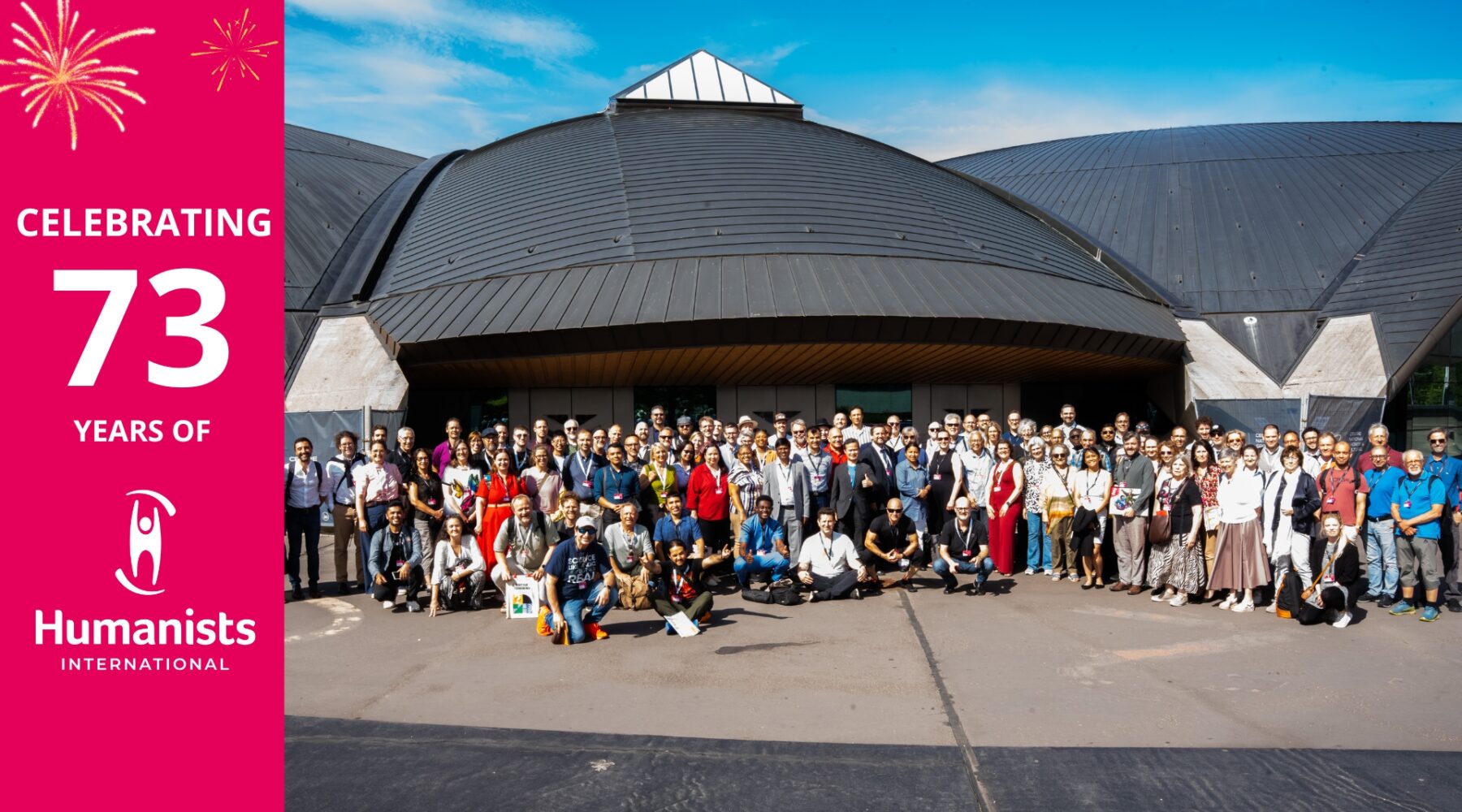
On 26 August 1952, humanists from across the world gathered in Amsterdam for the first World Humanist Congress. Guided by pioneers such as H. J. Blackham, and with the cooperation of colleagues from Holland, India, America, and Austria, they established the International Humanist and Ethical Union (IHEU) – today known as Humanists International.

The Congress produced the Amsterdam Declaration, a landmark statement affirming the democratic, scientific, creative, ethical and liberating principles of Humanism as “a way of life for everyone everywhere.” T
he Declaration emerged during a world reeling from the trauma of World War II and standing firm against the threat of dogmatic ideologies, offering a rational, ethical alternative rooted in democratic human development. It emphasized that moral progress stems from human reasoning, not supernatural authority, and that science offers the means, but human values must define the ends.
Seventy-three years on, Humanists International has grown into a truly global federation, uniting more than 160 humanist, secular, rationalist and freethought organizations in over 80 countries. Our work spans continents and cultures, connecting grassroots initiatives with international advocacy, always with the aim of advancing reason, compassion and human dignity.
Recent years have seen important milestones. At our 2025 General Assembly in Luxembourg, delegates elected Maggie Ardiente as President, following Andrew Copson’s tenure. This change represents not just a new face at the helm but a renewal of leadership at a pivotal time for the movement.
Alongside leadership renewal, our Grants Program has continued to provide lifelines to humanist groups around the world. In 2025, over £32,000 was distributed to projects tackling superstition, promoting science and critical thinking, and building stronger secular organizations in regions where resources are scarce. This funding is more than financial support, it is a statement of solidarity with humanists who often work in difficult or hostile environments.
Advocacy, likewise, remains central to our mission. At the United Nations, Humanists International has spoken out on issues ranging from the role of religion in perpetuating gender-based violence to the importance of protecting LGBTI+ rights. We have joined with over 1,200 other NGOs in urging the renewal of the UN mandate on violence and discrimination based on sexual orientation and gender identity, ensuring that international commitments keep pace with human rights realities.
Our annual Freedom of Thought Report continues to be a vital tool in this work. The 2024 edition once again shed light on discrimination and persecution faced by the non-religious worldwide, highlighting restrictions on freedom of belief, blasphemy laws and systemic inequalities. This report has become an authoritative source for governments, media and advocacy groups alike.
Looking back, the founders of 1952 could not have imagined the scale and reach of the movement they launched in Amsterdam. Yet the challenges they sought to address – dogma, authoritarianism and the denial of human dignity – remain with us. Humanists International continues to meet those challenges head-on, inspired by the Amsterdam Declaration and powered by a global community of supporters.
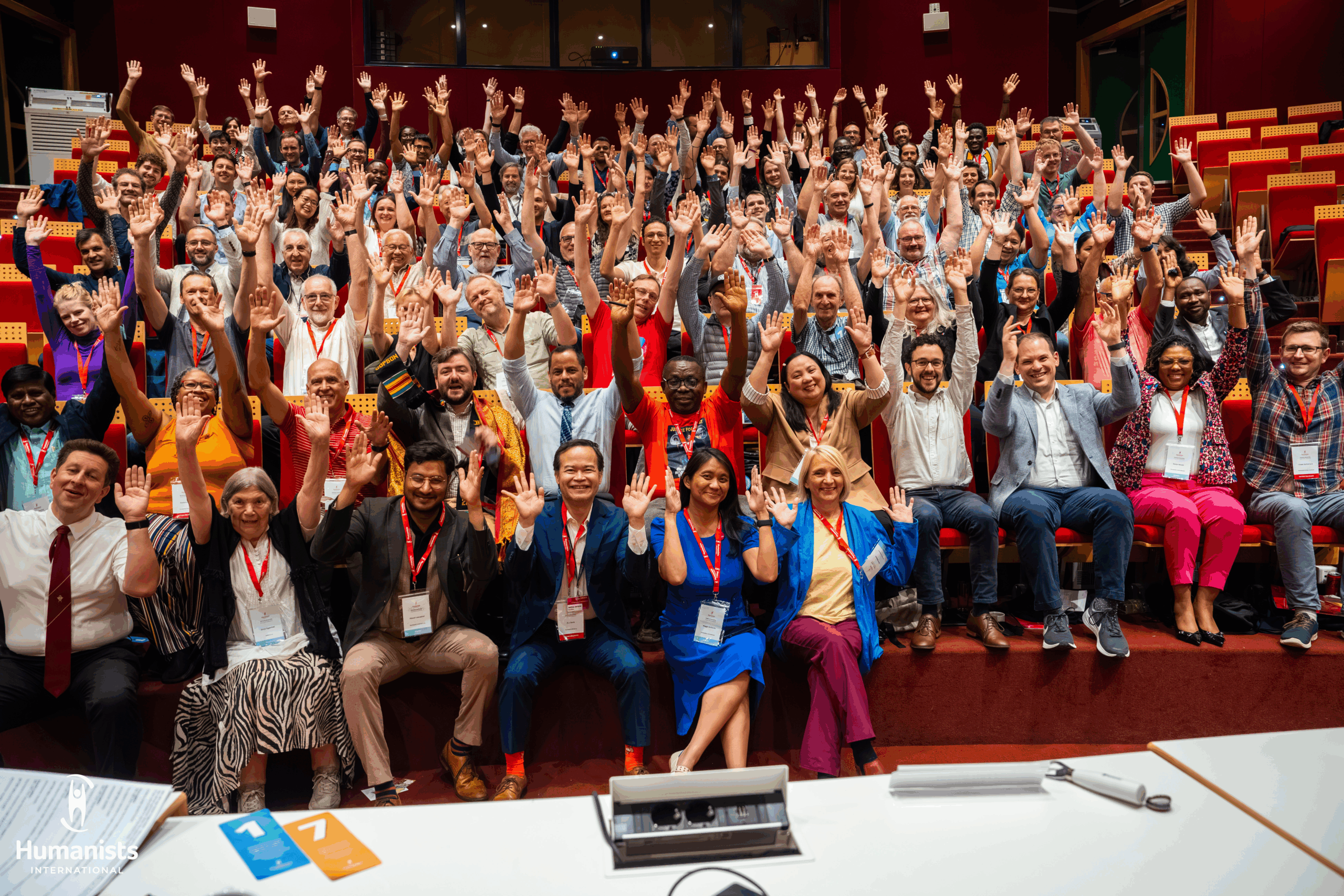
As we celebrate our 73rd anniversary, we do so with gratitude for the past and determination for the future. Humanists International is not only defending freedom of thought and supporting those at risk; it is also building a global humanist movement equipped to shape a world grounded in evidence, ethics and empathy.
Here’s to the next chapter of humanist progress.