
The intervention was delivered by Sophie in ’t Veld, former Member of the European Parliament and recipient of the International Humanist Award, who spoke on behalf of deMens.nu after being nominated as a representative by Humanists International. She addressed the Article 17 dialogue seminar held at the European Parliament under the theme “Beyond the numbers: the contribution of Article 17 TFEU to an EU Multiannual Financial Framework grounded in ethics, solidarity and inclusion” and hosted by Vice-President Antonella Sberna.
In her statement, Sophie in ’t Veld recalled that humanists believe it is the role of public authorities to protect the right of every individual to live according to their convictions or beliefs, without harming others, and that this requires state impartiality. While EU treaties, laws, and the Charter of Fundamental Rights reflected this principle, she warned that rights and freedoms were increasingly under pressure, including within Europe itself.
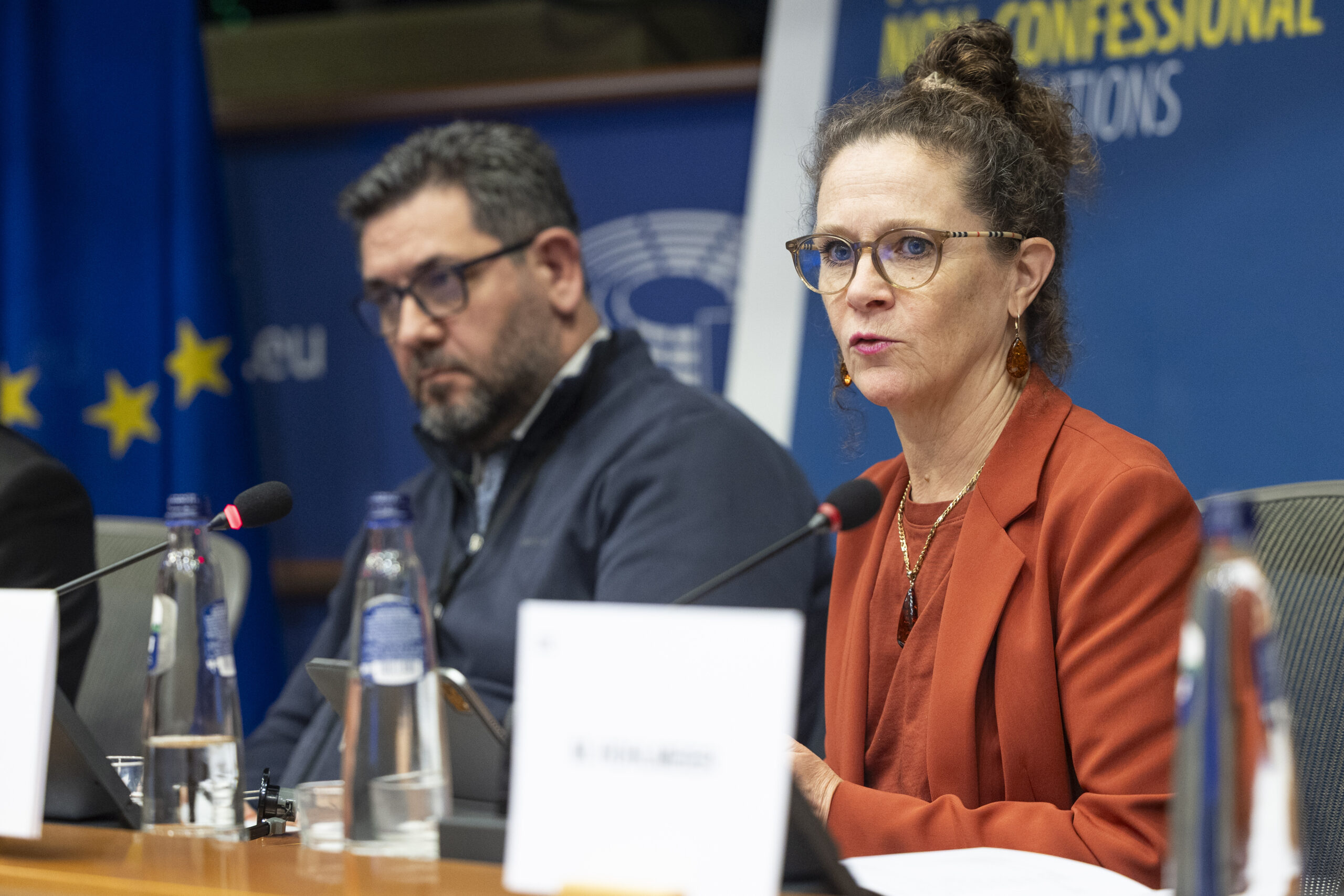
Sophie in t’ Weld addresses the Article 17 Dialogue at the European Parliament
Sophie in ’t Veld welcomed the Commission’s stated intention to support a “vibrant civic space” and its proposal to allocate nearly €9 billion to democracy, equality, and the rule of law. However, she warned that these commitments must be judged against the political reality in which EU funds are spent, noting that increased re-nationalisation risks empowering governments that undermine women’s rights, LGBTI rights, freedom of expression, and freedom of conscience. She pointed to the Council’s continued failure to adopt the horizontal anti-discrimination directive – blocked for over seventeen years – as evidence of weak political will at national level.
She also raised serious concerns about the shrinking space for civil society across the EU, highlighting attacks on NGOs through SLAPP lawsuits, surveillance, and restrictive laws in countries including Hungary, Greece, and Italy. At the same time, she criticised declining enforcement of EU law and warned that political alliances were increasingly taking precedence over action against rights violations, undermining the credibility of EU values enforcement.
The dialogue brought together representatives of religious and non-religious organisations, Members of the European Parliament, and senior EU officials to discuss how the next Multiannual Financial Framework – the EU 7-year budget – can reflect the EU’s ethical commitments in an increasingly polarised political environment. Participants examined the relationship between budgetary priorities, democratic resilience, and social cohesion, with particular focus on civil society protection, migration policy, and the defence of fundamental rights within the EU.
Photo: EC Audiovisual Service, Alexis Haulot © European Union, 2025