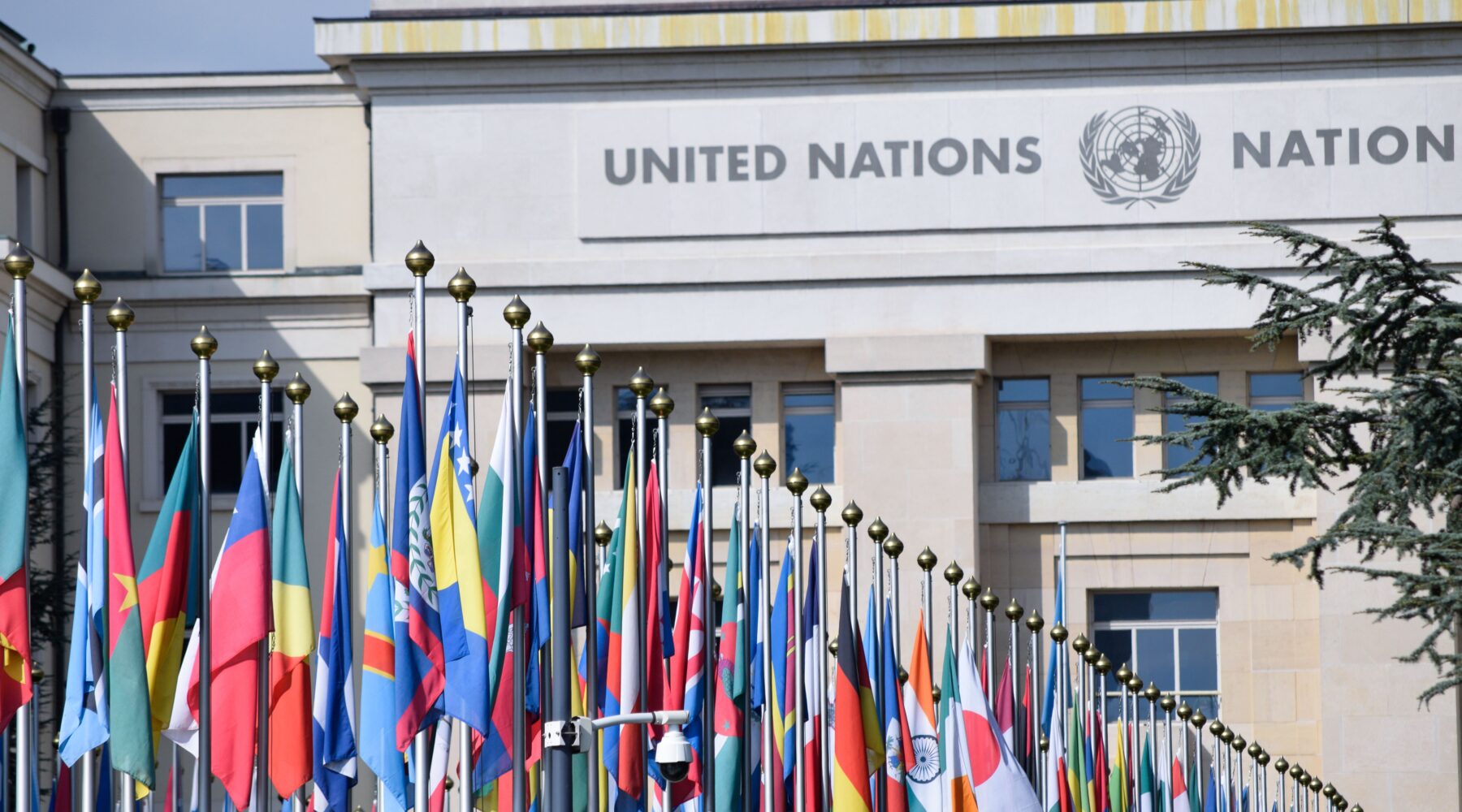
In response to the UN Human Rights Committee’s call for input on Draft General Comment No. 38 on Article 22, Humanists International recently made a submission highlighting four gaps in the draft General Comment, joining several other civil society organizations that submitted their inputs to the Committee.
Humanists International’s submission, which was enriched by the input of our global network of member organizations, focused on four concrete issues with the text as it currently reads. First, the draft General Comment lacks explicit references to “belief” throughout the text, which has implications in the real world for humanists, atheists, agnostics, and other non-religious individuals and communities whose ability to access the right to freedom of association is already curtailed in numerous ways. The submission further explains that the draft General Comment should make clear that limitations on the right to freedom of association should not be used to undermine the right to freedom of religion or belief, particularly for religious or belief minorities, and uphold equal treatment for religious organizations and their non-religious counterparts—with States Parties having a positive obligation to treat similar organizations in a similar manner.
Second, the submission highlighted the increasing instrumentalization of the right to freedom of association, and the human rights system more broadly, by anti-rights actors, groups, and movements who seek to undermine the international human rights system using the language of human rights. Humanists International submitted that anti-democratic associations should not be permitted to instrumentalize international human rights protections to pursue anti-democratic goals, and recommended that the Committee explicitly mention that Article 5 of the ICCPR is engaged when restricting associations whose object or activity is the destruction of the rights of others, and a contextual assessment consistent with the Rabat Plan of Action on the prohibition of advocacy of national, racial, or religious hatred that constitutes incitement to discrimination, hostility, or violence is crucial.
Humanists International further highlighted the gap in guidance on when it is appropriate to bring action against individuals as opposed to restricting associations. The draft General Comment proposes determining the dominant message of an association to make such an assessment. Presently, there is no jurisprudence on the dominant message of an association for the purposes of determining restrictions on the freedom of association. The submission argues that the dominant message of an association, particularly when used to determine whether action can be taken against individual members or the association as a whole, should be a careful legal assessment. In the absence of such a legal standard, States Parties have wide discretion and may treat this as a factual assessment, putting ICCPR rights at risk. The Rabat Plan does not directly address the question of determining the dominant message, but the guidance on contextual assessment and the six-part threshold test can be illustrative.
Finally, on the issue of transnational repression, which arises when governments reach across national borders to coerce, control, and silence individuals in other countries using a broad range of methods (ranging from digital surveillance to extraterritorial killings), Humanists International submitted that the draft General Comment should explicitly acknowledge the positive and negative obligations of both States of origin and host States, as well as ensure that it is harmonized with the evolving international human rights jurisprudence on TNR. Highlighting the threats faced by human rights defenders and “humanists at risk”, Humanists International recommended stronger language to reflect the evolving and increasingly pernicious nature of TNR.
Humanists International welcomed the Human Rights Committee’s draft General Comment and the opportunity to contribute to its development. The submission is rooted in the policies of Humanists International, which has worked to defend and strengthen the protection of human rights since its 1952 founding. These recommendations share the goal of ensuring that the right to freedom of association is protected for all, while guarding against its instrumentalization by anti-rights actors and States Parties evading their international obligations.
Featured photo by Xabi Oregi via Pexels
Together we can do even more to promote humanist values and defend human rights. Join Humanists International as a Member Organization or become an individual supporter in your own right.