The statement was delivered was delivered by Mila de Baere on behalf of deMens.nu, a Member Organization of Humanists International which brings together 38 member associations in Flanders, as well as Humanists International. Belgium was reviewed by the UPR Working Group at its 52nd session on 6 May 2026, and the outcome of that review came back to the Council for adoption this month.
The organizations thanked the Belgian delegation for its presentation before turning to the recommendations Belgium had declined to support. International human rights law, the statement said, recognizes abortion as part of the right to sexual and reproductive health and rights, as well as of the rights to health, bodily integrity, and autonomy.
Over the past year, more than 40 per cent of abortions involving people living in Belgium were performed either illegally in Belgium or abroad, or legally abroad. Between 330 and 800 people travel to the Netherlands every year for a termination after Belgium’s twelve-week legal limit, at their own expense. Belgian law also imposes a mandatory six-day waiting period, and the World Health Organization has recognized that waiting periods of this kind demean women as competent decision-makers and has recommended that States eliminate them.
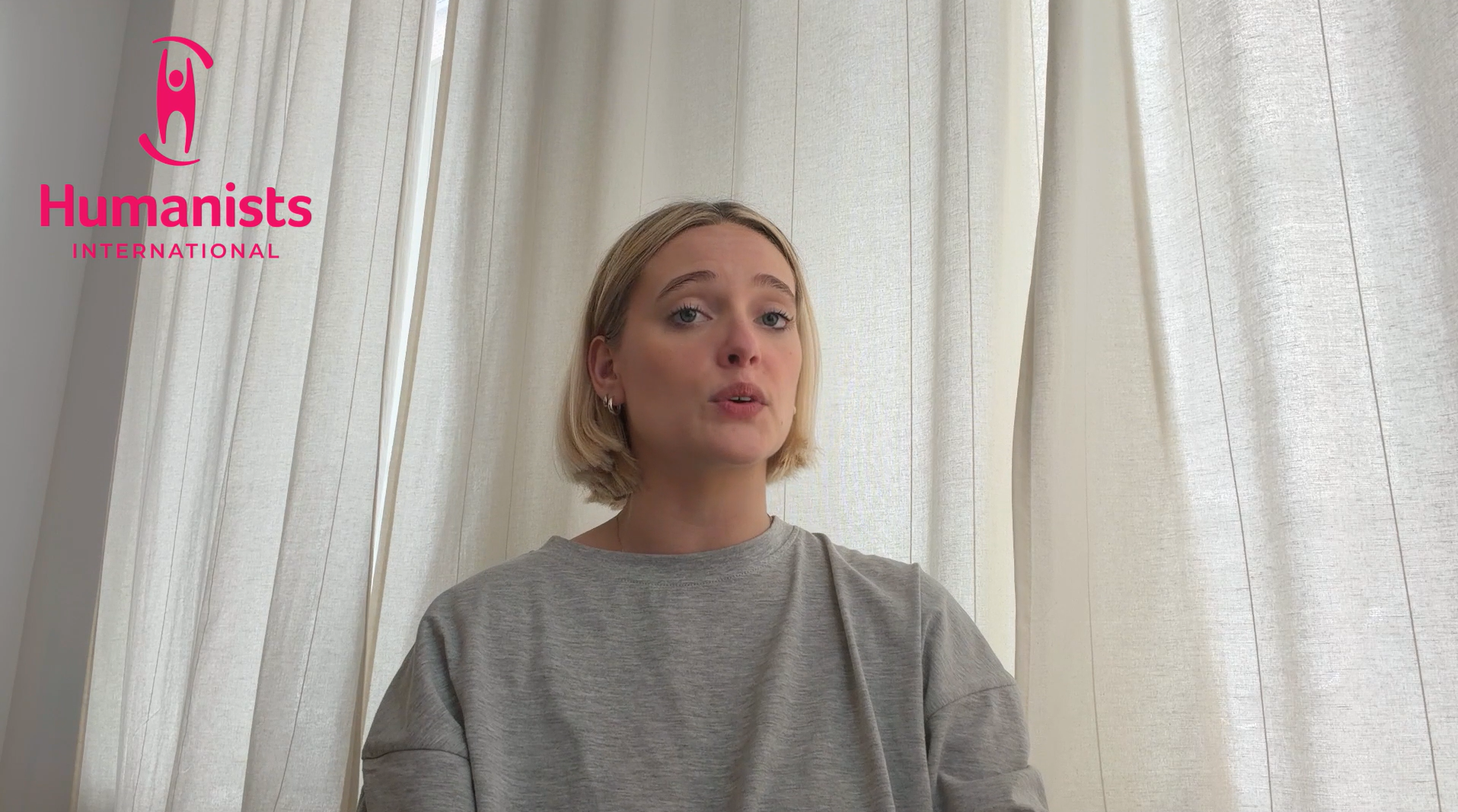
Mila de Baere delivers the statement to the United Nations by video
Those restrictions fall hardest on people in vulnerable and marginalized circumstances, the statement argued, because the additional time, consultation, and costs make access particularly difficult. It noted the work of Compagnon, which accompanies on average one person each week by car to the Netherlands, while making clear that this was not a solution. The State, the statement said, should not be outsourcing its human rights duties.
deMens.nu delivered this statement in follow-up to its written submission during the preparation of the review, and its attendance and presentation at the UPR Info Pre-Session, where civil society is given an opportunity to address the states which will deliver the recommendations to the State under Review.
*The Universal Periodic Review (UPR) is a UN process which involves a periodic review of the human rights records of all 193 UN Member States, by each other. It is a unique human rights mechanism in so far as it addresses all countries and all human rights. The Working Group on the UPR, which is composed of the Human Rights Council’s 47 Member States and chaired by the Human Rights Council President, conducts country reviews.
Featured Photo by Wei Huang.
As a registered charity and NGO, we rely on the donations we receive from our members and supporters to help us campaign on humanist issues and lobby for humanist values at international institutions (including the United Nations). If you support our aims, please consider giving a one-off or regular gift today. Thank you.