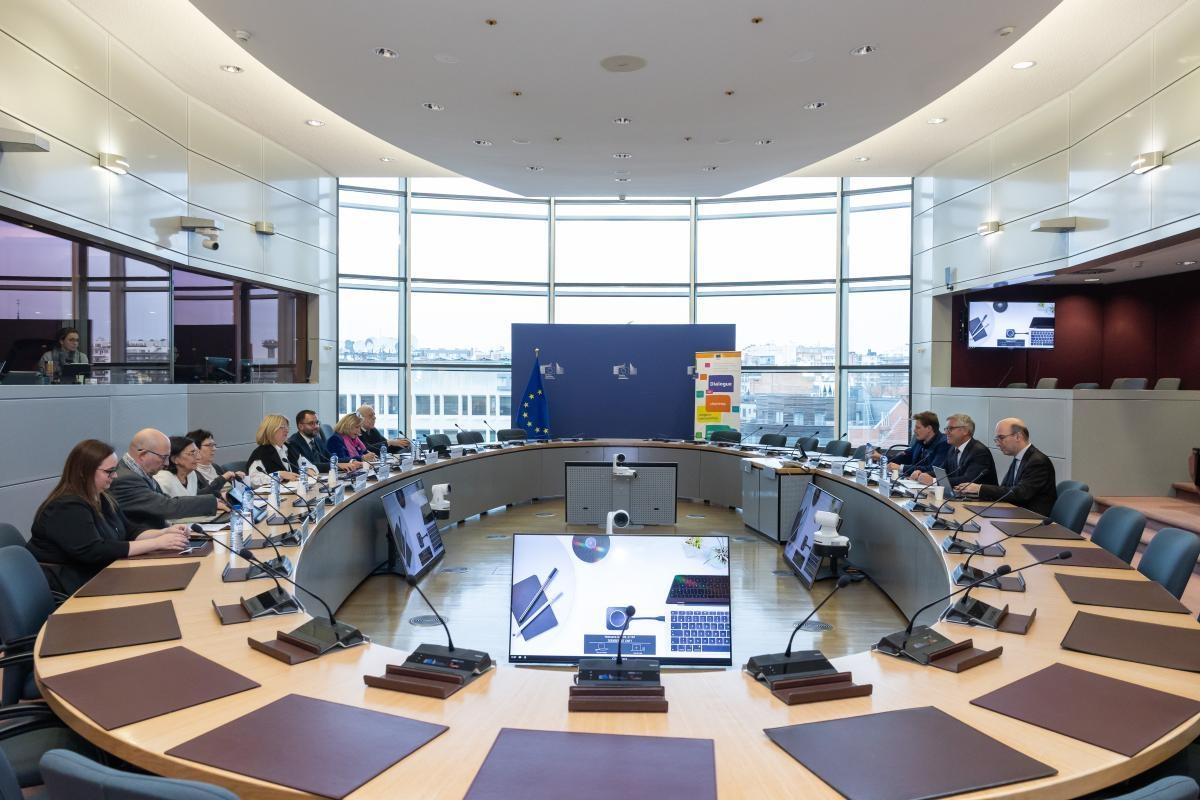
Humanists International intervened at the Article 17 high-level meeting with Commissioner Magnus Brunner on “Responding to the polarization of our societies” on December 1, highlighting how political actors, anti-rights networks, and digital technologies are actively driving division across European societies.
Speaking on behalf of Humanists International, CEO Gary McLelland described polarization not as a natural consequence of pluralism, but as “manufactured polarization.” He pointed to extensive research, including the Next Wave report by the European Parliamentary Forum for Sexual & Reproductive Rights, which documented more than US$1 billion in coordinated funding for anti-rights and anti-equality actors seeking to undermine social cohesion and democratic norms.
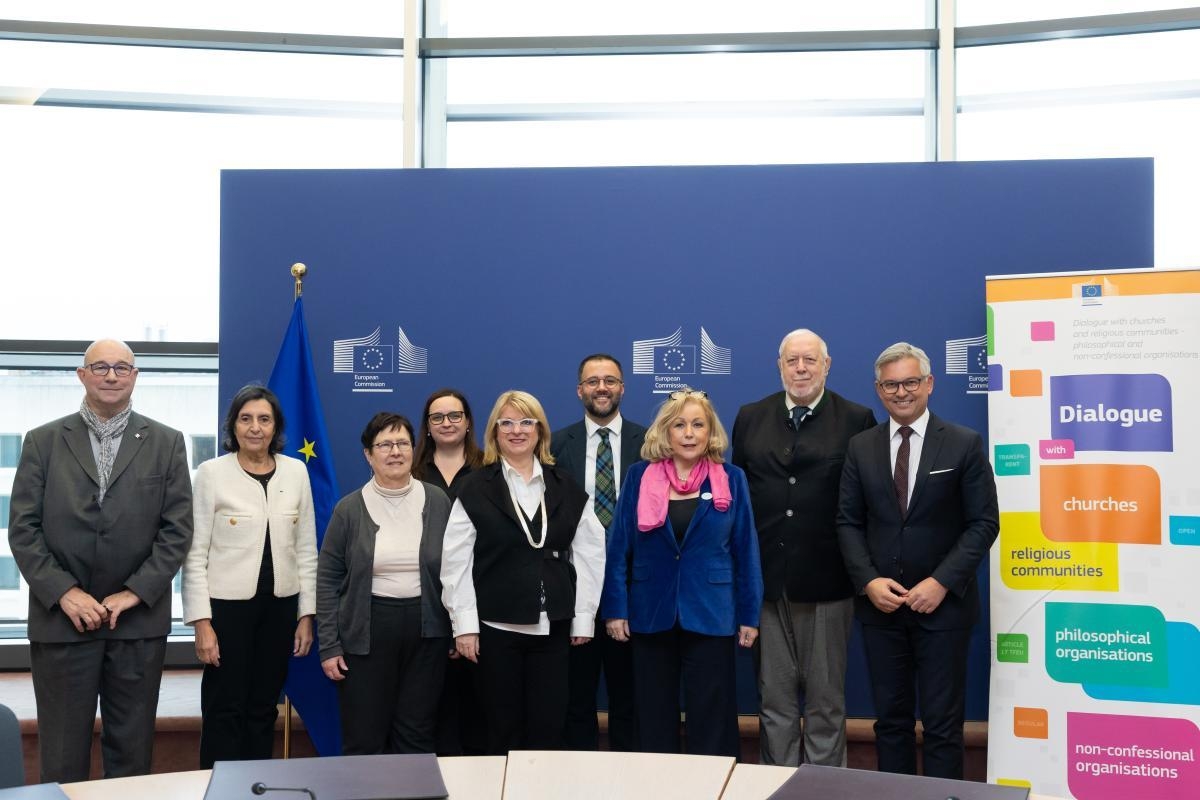
Representatives of non-confessional and philosophical organizations, including Gary McLelland and Monica Belitoiu of Humanists International
He further cautioned against weakening freedom of expression in the name of combating hate. Drawing on the Rabat Plan of Action, his remarks stressed the importance of maintaining a clear distinction between protected speech, including criticism of religious ideas, and incitement to violence. He expressed concern that religion-specific protection mechanisms, including demands for an EU coordinator on anti-Christian hatred, risk siloing human rights and excluding the non-religious. He also followed up on Humanists International’s concerns around the appointment of an EU Special Envoy on Freedom of Religion or Belief, which, in its current capacity, also risks undermining the universality and mutuality of human rights. These concerns were raised in a letter to the Commission sent last month.
Monica Belitoiu, Humanists International board member and Executive Director of the Romanian Secular-Humanist Association (ASUR), complemented these concerns by grounding them in lived experience, drawing on Romania’s 2025 presidential election as a case study of how polarization can be intentionally engineered. She described how AI-generated disinformation, deepfakes, and targeted narratives were used to erode trust in institutions, civil society, and even between neighbors, with women, LGBTIQ+ people, migrants, and religious and non-religious minorities repeatedly placed at the center of these fractures.
The meeting took place under Chatham House Rules, with other non-confessional and philosophical leaders voicing their concerns to Commissioner for Internal Affairs and Migration, Magnus Brunner. The Article 17 dialogue forms part of the European Commission’s formal engagement with religious and non-confessional organizations under Article 17 of the Treaty on the Functioning of the European Union.
Photo: EC Audiovisual Service, Aurore Martignoni © European Union, 2025