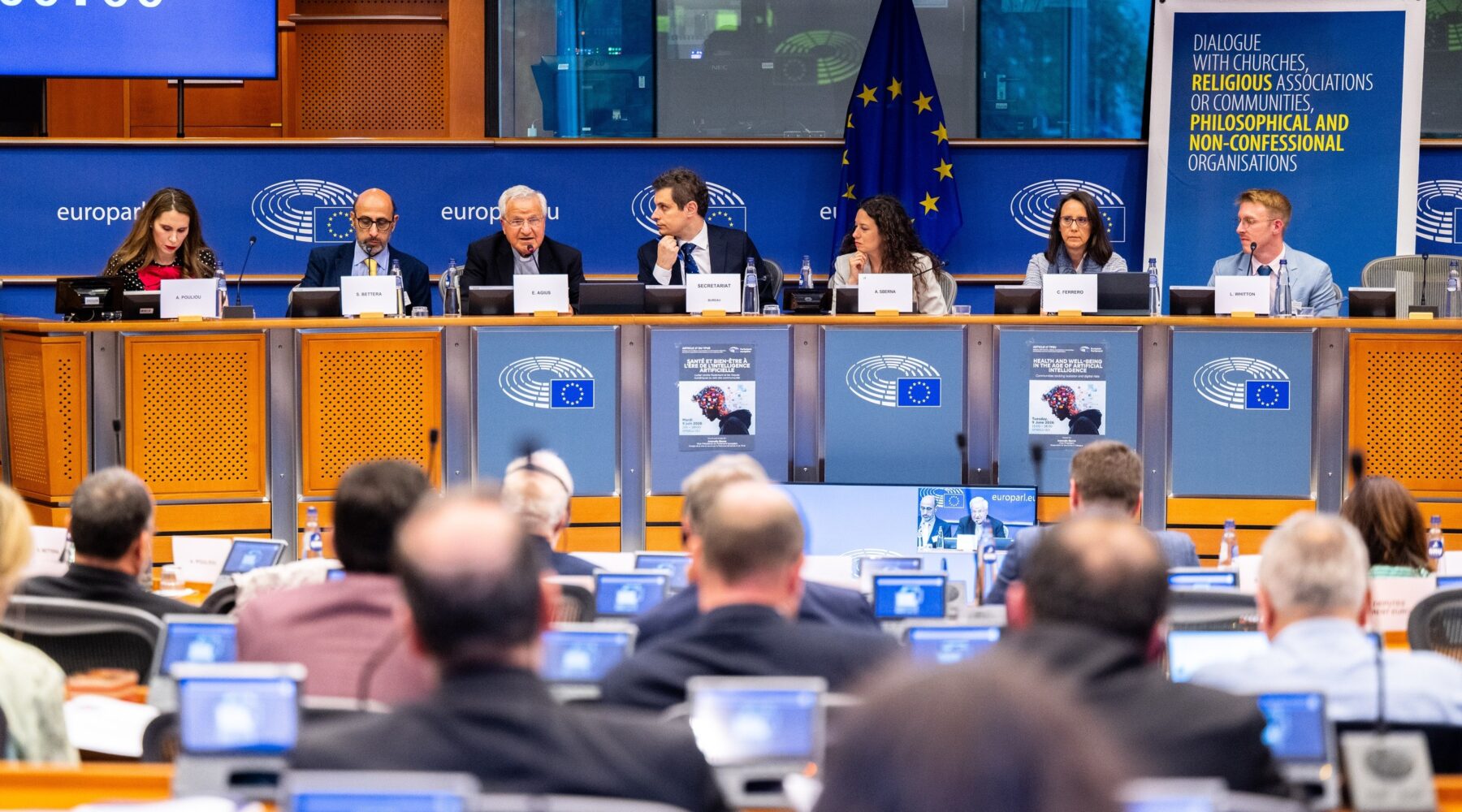
The speech was delivered by Liam Whitton, intervening on behalf of Humanists UK after being nominated to represent Humanists International, at an Article 17 dialogue seminar entitled “Health and well-being in the age of artificial intelligence: communities tackling isolation and digital risks” that took place on June 9 in the European Parliament.
Grounding his remarks in the Luxembourg Declaration on Artificial Intelligence and Human Values, Whitton (recording) criticized ongoing efforts to deregulate AI, known as Digital Omnibus, and pointed at regulatory gaps around AI companion apps. Even though these systems have been linked to mental health deterioration, they are only considered “limited risk” under EU legislation. He highlighted that these systems could erode the standards of human care and urged MEPs to regulate them.
The intervention also targeted provisions in the Digital Omnibus weakening AI literacy obligations and delaying the application of high-risk rules until late 2027 and 2028. High-risk systems deployed in healthcare settings would go at least another two years before being subject to these rules, which include a requirement for human oversight. Amidst rising health information, Whitton also emphasized the importance of education and lamented the weakening of AI literacy obligations in the AI Act and delay in watermarking rules.

Liam Whitton, Humanists UK
Whitton concluded by invoking philosopher Bertrand Russell’s axiom that “the good life is one inspired by love and guided by knowledge,” explaining:
AI will, however imperfectly, no doubt continue to aid in the expansion of human knowledge. It certainly has a role to play in the enrichment of human health and welfare. But AI cannot supply love. It can simulate, but never embody, human empathy, human compassion, or human kinship.
The high-level event, which was recorded, featured remarks from Parliament President Roberta Metsola, Commissioner Magnus Brunner, senior EU officials and MEPs, as well as representatives from religious communities, non-confessional organizations, and broader civil society. It formed part of the European Parliament’s formal engagement with religious and non-confessional organizations under Article 17 of the Treaty on the Functioning of the European Union.
Photo: Laurie DIEFFEMBACQ, European Parliament © European Union 2026