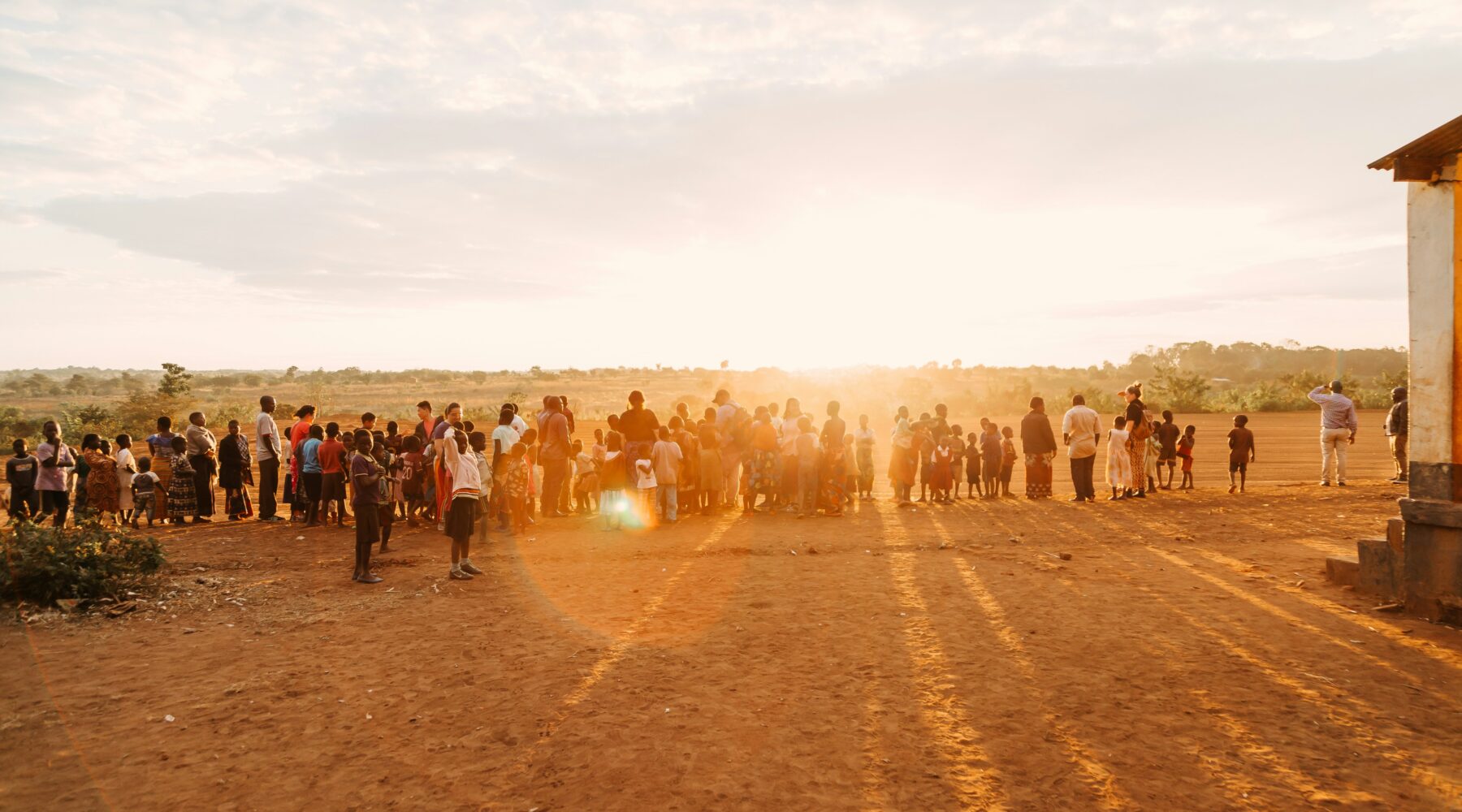
Humanism in Malawi: Wonderful Mkhutche on Secular Progress
Scott Douglas Jacobsen interviews Wonderful Mkhutche, Director of Humanists Malawi, on dismantling superstition through education, media, and policy.
Scott Douglas Jacobsen interviews Wonderful Mkhutche, Director of Humanists Malawi, on dismantling superstition through education, media, and policy.
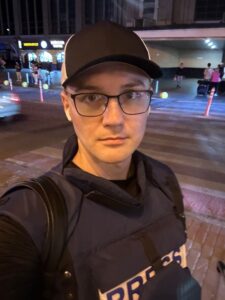
Image credit: Scott Jacobsen.
Scott Douglas Jacobsen is the publisher of In-Sight Publishing (ISBN: 978-1-0692343) and Editor-in-Chief of In-Sight: Interviews (ISSN: 2369-6885). He writes for The Good Men Project, The Humanist, International Policy Digest (ISSN: 2332-9416), Basic Income Earth Network (UK Registered Charity 1177066), A Further Inquiry, and other media. He is a member in good standing of numerous media organizations.
Author Disclaimer
The views and opinions expressed in this article are solely those of the author and do not necessarily reflect the official policy or position of any organization, institution, or entity with which the author may be affiliated, including Humanists International.
Wonderful Mkhutche discusses the progress of humanism in Malawi, emphasizing efforts to challenge superstition and religious influence. He highlights successes, such as preventing the legal recognition of witchcraft and maintaining Malawi’s secular constitution, despite challenges from religious policymakers. Vision 2063 marks a shift away from God-fearing governance toward human-centered policies. Malawi has strengthened ties with Humanists International, Dr. Leo Igwe, and regional organizations, gaining resources and legitimacy. While humanism’s growth is gradual, public lectures, media engagement, and international support are helping expand secular activism and foster critical thinking in Malawi.
Scott Douglas Jacobsen: Today, we’re with Wonderful Mkhutche, the Director of Humanists Malawi. What is new on your end with regard to humanism? Specifically, commenting on witchcraft allegations and associated supernaturalistic nonsense. What’s new in humanism and activism in Malawi?
Wonderful Mkhutche: In humanism and activism in Malawi, we are doing a lot besides our usual activities, including fighting against the belief in witchcraft and the violence that stems from it. Recently, we also held a public lecture at the University of Malawi.
This was an invitation from the Department of Theology and Religious Studies. The invitation alone shows that we are being recognized, even though the studies are primarily focused on religious perspectives. However, the students expressed interest in hearing more from a humanistic perspective.
They contacted me and then reached out to the head of the department. We were there on February 28th, discussing the topic of understanding theology in our local context. We aimed to provide a broader perspective, emphasizing that theology students are not here to simply reaffirm their religious beliefs.
In fact, the knowledge they gain should encourage them to question their beliefs and critically examine what they have been taught. I used myself as an example, as I have a background in Christianity and theology but ultimately became a humanist. I emphasized that it is okay to take that path because knowledge should lead to deeper questioning and critical thinking about previously held beliefs.
We continue to engage with people, meeting them in public spaces and through media, striving to change perspectives on various issues.
Jacobsen: Would you say that, in general, people lose their religious faith—or faith in general, whether in local superstitions or in the post-colonial context of Christianity—gradually rather than abruptly? In other words, it’s not like quitting smoking and never smoking again. Instead, it’s a process where, over time, they let go of more and more of the irrational aspects of religious faith.
Mkhutche: Generally, people lose their religion gradually. In my opinion, I would even encourage or recommend that kind of process. That was the same path I followed. For almost two to three years, I continuously questioned my beliefs, reading extensively, listening to different perspectives, and debating these ideas internally.
By the time I decided to become a humanist, I was fully aware of what I was embracing. I’m pleased that people recognize my consistency in my religious views, which stems from the extensive time I took to reflect and critically examine my beliefs before reaching my conclusion.
This is the approach I would encourage others to take because it leads to a genuine conviction rather than an impulsive decision, which might later be regretted.
Mkhutche: And for most people who are humanists or atheists, that is the path they have taken because almost everyone here has a religious background. To deal with that background, you can’t do it in a single day—it takes years. That is why this is the general story for most humanists or atheists.
Jacobsen: What about the types of superstitions you find in Malawi that you wouldn’t find in other African countries? For example, Ghana has its own kind, Nigeria has its own situation, and the same goes for Tanzania, Zimbabwe, and Zambia, etc. Each of these countries has its own history with colonialism, but they also had unsubstantiated superstitious beliefs well before colonialism. Can you provide some insight into the nature of superstition in Malawi? What kinds of beliefs still persist among the public?
Mkhutche: The kind of superstition present in Malawi is not unique to the country, as it is common across most African nations, including our neighboring countries. However, when I compare it to West Africa, I notice that traditional religious beliefs still have a strong influence on most people, shaping the nature of superstition.
For instance, in Nigerian movies, we often see a combination of black magic and modern life. But in Malawi, people are not as deeply connected to traditional religions or practices. Instead, most superstitions here are heavily influenced by religion, particularly Christianity. People perceive the existence of the devil—Satan—as a major factor behind various events.
Whenever something happens, it is often attributed to the influence of Satan, and the solution is simply to pray. This is the dominant form of superstition in Malawi. Of course, some individuals still hold superstitions rooted in traditional beliefs, but they are not as widespread. The religious form of superstition dominates the thinking of most people.
Jacobsen: In your professional work, what is the process for helping people develop a more scientific understanding of the world and rely less on religious faith in Malawi? Is there a structured way to bring people into Humanist Malawi?
I hear, for instance, from some American humanist groups that people often carry cultural holdovers from the church when they transition to a humanist community. It’s not just about giving up the belief in God—it’s also about shedding cultural assumptions that may be burdensome.
For example, people might still hold rigid views about men’s and women’s roles in society, even after leaving religion. This suggests that humanism is a much broader philosophy than simply rejecting religious belief.
Mkhutche: When it comes to influencing people to change the way they perceive the world, there are several approaches, and we employ some of them as humanists in Malawi.
As mentioned earlier, since most people rely on religion to draw superstitious conclusions, our first focus has to be on the religious aspect. In Malawi, this primarily means addressing Christianity and Islam, as they are the dominant religious influences shaping people’s worldviews.
What we do, for example, during media interviews, is attempt to challenge the two dominant religions by pointing out that they are foreign imports. These are not the religions that Africans originally practiced. If one insists on being religious, then perhaps they should look back to traditional African religions rather than these foreign ones.
We also address misconceptions about prayer, particularly the belief that it can heal illnesses. Whenever there is a case where someone was prayed for but still passed away, we use that as an example to illustrate that prayer does not work. Instead, we emphasize that seeking medical assistance would improve outcomes.
These are some of the approaches we take. Another important method is engaging with people in various settings, such as the recent public lecture. There, we had an in-depth discussion on prayer, superstition, and how theology students themselves can help shift the country away from a superstitious mindset.
There is still much work to be done. However, in general, this is a slow process because even those in positions of authority cannot implement necessary changes quickly. Many of them believe in the very superstitions we are trying to challenge.
As humanists, we are few in number and lack the resources for a broader outreach. However, we are slowly making an impact. The key is that we are planting the idea. Over time, these ideas will take root, and in the years to come, we may see a different kind of society emerge.
Jacobsen: What has been the biggest political or policy change that you have helped influence or witnessed in Malawi?
Typically, to build a culture, you can organize social gatherings, hold conventions, and develop educational resources. These efforts help. You can also maintain a website, publish a blog, and host online symposia and conferences. These, too, contribute.
However, the more substantive and lasting change usually comes from policy and political reforms. What policy or political changes have you observed in the Malawian government that have been more beneficial than not?
Mkhutche: When it comes to policy, perhaps the most significant development has been the debate surrounding changes to the law two to three years ago. As Humanist Malawi, we stepped in to argue that the law should not be amended to formally recognize witchcraft.
Since those debates, there has been no movement toward changing the law. For now, we consider that a success. Even though the proposal is now at the cabinet level, we do not know when—if ever—someone will push to present it in parliament.
We remain hopeful that no one will have the resolve to go that far.
In terms of policy, we still see ourselves as having done a good job in ensuring that the proposed recognition of witchcraft was halted.
Regarding other political changes related to superstition or religion, Malawi does have good policies. Our constitution remains secular—it is a civil constitution that is not aligned with or tilted toward any religion. The challenge, however, is that those responsible for implementing the constitution are themselves religious. As a result, they often find ways to insert their personal beliefs into state or government activities.
This means that the religious aspect continues to surface in governance. However, I must also acknowledge some progress.
When we transitioned to multiparty democracy in 1994, the country developed what was called Vision 2020, a long-term national plan. In the preamble of that vision, it was stated that by 2020, Malawi would be a middle-income, God-fearing country. This explicitly showed how religion was embedded in policy documents.
However, its successor, no longer describes Malawi as a God-fearing nation. In fact, there is a section in the document that critiques religion as a factor that can hinder a country’s development. This shift in thinking is noteworthy.
Policy-wise, we used to believe that the country should be led with religious faith at its core. But now, we have moved beyond that perspective. The focus is on policies that will drive human development rather than religious identity.
Jacobsen: We have a few more minutes. How is Malawi integrating into the wider humanist and secular movements in Africa?
Mkhutche: It is going well. When we first started, we felt quite lonely—we felt isolated. The humanist community in Malawi was very small.
However, we now have connections with Humanists International and the atheist community in the United States. At the regional level, we are engaged with humanists in Kenya, Zimbabwe, Zambia, and Nigeria, particularly through Dr. Leo Igwe.
Dr. Leo Igwe has done a great deal to help Humanists Malawi establish links with individuals and organizations outside the country.
Through these connections, we are gaining new skills and knowledge. We now have the confidence to organize activities such as public lectures. So, overall, we are doing well.
Ultimately, these connections will provide us with greater authority and resources, allowing us to expand humanism in Malawi and reach a wider audience.
Jacobsen: Wonderful. It was great to talk to you again. I appreciate your time.
I will get this transcribed and then send it to you for review.
Mkhutche: Okay. Thank you, Scott.
Jacobsen: Thanks, and take care.
Mkhutche: Bye.
Photo by Abrahan Echeverria on Unsplash