Humanism as Resistance: AJ on Youth, Global South Solidarity, and the 2026 World Humanist Congress
AJ speaks with Scott Douglas Jacobsen about “Humanism as Resistance,” the theme of the 2026 World Humanist Congress in Ottawa.
AJ speaks with Scott Douglas Jacobsen about “Humanism as Resistance,” the theme of the 2026 World Humanist Congress in Ottawa.

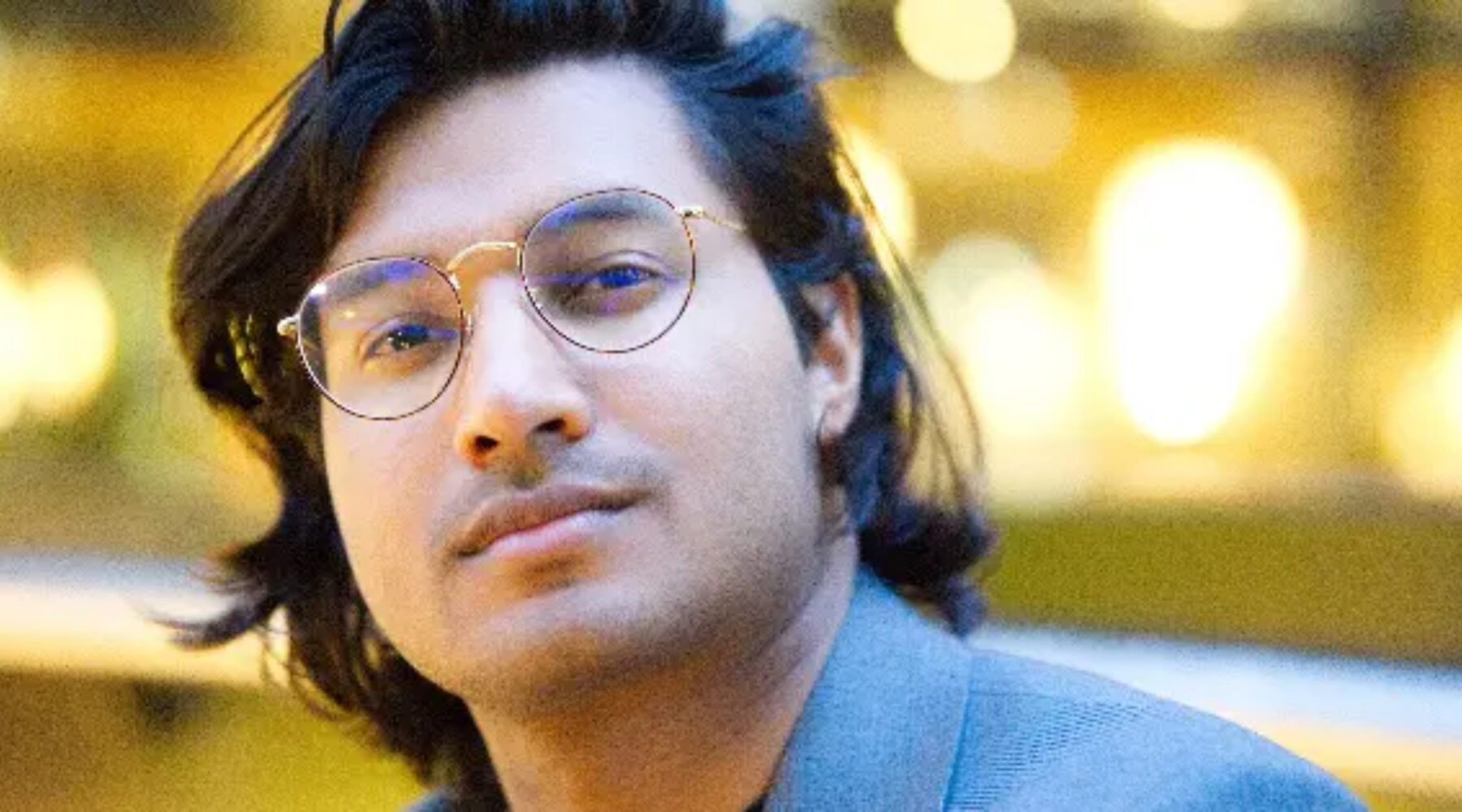
Image credit: Scott Jacobsen.
Scott Douglas Jacobsen is the publisher of In-Sight Publishing (ISBN: 978-1-0692343) and Editor-in-Chief of In-Sight: Interviews (ISSN: 2369-6885). He writes for The Good Men Project, The Humanist, International Policy Digest (ISSN: 2332-9416), Basic Income Earth Network (UK Registered Charity 1177066), A Further Inquiry, and other media. He is a member in good standing of numerous media organizations.
Author Disclaimer
The views and opinions expressed in this article are solely those of the author and do not necessarily reflect the official policy or position of any organization, institution, or entity with which the author may be affiliated, including Humanists International.
AJ was elected to the Humanists International board in 2023. He serves as the national coordinator of Young Humanists UK. His particular focus is on young humanists, on dialogue between faith and belief groups grounded in a shared humanistic spirituality, and on support for apostate refugees. He also strives to work on issues of ecological sustainability for future generations. He was born in South India and is based in London, UK.
AJ speaks with Scott Douglas Jacobsen about “Humanism as Resistance,” the theme of the 2026 World Humanist Congress in Ottawa. He outlines record early ticket demand, a new HI-led model for the Congress, and the importance of scholarships and grants for youth and Global South activists. Citing examples from Luxembourg, Singapore, and Czech Humanists, AJ argues that humanism must address material realities—from bus fares to witchcraft accusations—offering both resistance and hope, and that, in practice worldwide, it should be a global humanist “family” rather than a detached academic bubble.
Scott Douglas Jacobsen: Today, once again, we are here with a young Humanists International representative, AJ. With regard to the conference, and with regard to attracting more youth to humanism or providing an alternative to many of the dominant religions and political ideologies on offer for young people, how are things looking for the conference? How are things looking in terms of framing the event in a way that is appealing to a younger audience as well?
AJ: We have chosen Humanism as Resistance as the theme of the 2026 World Humanist Congress, and that has been pitched exactly right. We can see this in the uptake of the early bird tickets; they went on sale just under a month ago—three or four weeks ago—and we are already seeing a very strong response and are on track to reach capacity for the venue in Ottawa, Canada, where the Congress will be held from 7 to 9 August 2026. That would be a very good problem to have.
This level of early demand is new for us. This is also the first time Humanists International has formally organised and branded the World Humanist Congress in this way, in partnership with a national member organisation. Previously, the triennial Congress was hosted by one of our member organisations in different parts of the world, with Humanists International mainly playing a coordinating or advisory role. Now it is fully our global congress, with our staff and board overseeing it in close collaboration with the local host.
We are partnering with Humanist Canada as the local co-host in Ottawa. That is the model going forward, and it will be our approach every time Congress is held.
The World Humanist Congress is now the flagship global gathering of Humanists International—a core event within HI. We want young people—especially, but not exclusively—to think of it as an event to aim for every three years, along with our general members, associates, supporters, and allies.
We also have exciting keynote speakers that we will announce soon, aligned with humanist philosophy, international resistance to authoritarianism, and the theme of Humanism as Resistance. All of these positions allow us to address doubts about whether humanism can be an effective form of resistance, which many young people are asking. They want to know whether adopting or identifying with the humanist life stance will help them resist the global rise of populism and fascism.
How does humanism fit into that? We want to answer that question. We aim to offer hope as well as resistance; we do not want to be merely an opposition movement.
We draw inspiration, for example, from Zoran Mamdani’s electoral win in New York as a democratic socialist state legislator, where both resistance and hope were present in the political project he represented. Speaking from a UK context and comparing it with movements in the UK, Humanists UK is non-partisan but generally supports progressive policies and campaigns on a case-by-case basis. There is some resistance in the UK, but not much visible hope.
There is not much of a clear, positive vision for what should replace the current situation. There is the threat of the anti-immigrant far right, and efforts to address those concerns, but little clarity on what to replace it with beyond familiar centrist approaches. That is missing.
We do not want to repeat that mistake. We are determined not to. Our partners in Humanist Canada also want to emphasize that hope must be part of this effort. We are not merely positioning ourselves as resisters who complain or oppose, and consider that sufficient.
We are offering something new, and humanists are used to doing exactly that. Humanists resist many things, especially theistic religious institutions and their dominance, but Humanists International and its members have always framed humanism as a positive, comprehensive life stance grounded in reason, compassion, and human rights. We are not merely atheists.
We do not limit ourselves to saying that something is wrong. We resist it and replace it with a positive worldview. We say that we disagree and offer a replacement moral framework, a replacement worldview, and a coherent life stance.
In that sense, humanists have experience both in resistance and in bringing hope and fresh ways of thinking to these problems.
Jacobsen: Some American conferences are not going to take place this year for the broader secular movements, and those attendees are then going to be—or are—attending the General Assembly/World Congress?
AJ: Yes. Initially, this was planned—just to take you a bit behind the scenes—we were aiming to have it in Washington, D.C., but that had to be cancelled. We then found another venue in Ottawa with our partners, Humanist Canada, one of the national organizations in Canada, which stepped up to help us organize this.
Speaking for myself as an activist involved in social justice, I do not feel safe traveling to the U.S. This has been the case for about a year now, since we cancelled the event and tried to reschedule it. Even when we first made that decision, and the humanist groups in the U.S. made that decision, the situation was already concerning, but we have since seen more indications of that concern: ICE raids increasing, academics being held at the border.
We even had a U.K. activist, a Palestine Solidarity activist, who was detained in California and effectively disappeared for 24 to 48 hours—held without charge and questioned in a very underhanded way. These kinds of Gestapo-style tactics are not what we want when we are trying to set up a conference. Unfortunately, the U.S. has removed itself from consideration for these reasons.
Hopefully, it will not be too much trouble for people who were planning to come to Washington to travel a bit farther north and meet us in Ottawa. And the ticket sales, as I said, are quite spectacular. We are seeing a real need for humanists and humanist allies to meet and to exercise the moral force of gathering under the banner of Humanism as Resistance. So I believe we made the right move.
Jacobsen: When I was involved with what was then the International Humanist and Ethical Youth Organization, as we transitioned it to Young Humanists International, the dynamics and demographics of youth humanism may have looked different. How is it looking now? Are there particular regions doing interesting things? Are there areas where you are seeing more growth?
AJ: One call I would like to make—and we make it often—is that there is a great deal more potential and unused capacity in the system, especially when it comes to grants. We have a budget for Young Humanists grants and international projects. We have the Café Humanista brand that we use. There is a lot available to humanist organizations, especially youth humanist organizations. Some of them have enough funding—the lucky few—but many others are desperate for support.
We also offer a range of scholarships for this conference. Beyond the meeting in Ottawa next August, we want to emphasize that there are existing provisions that are not being claimed. This includes organizations in the UK as well. I recently had a meeting with the Northern Ireland Young Humanists, and I told them that Young Humanists grants from HI are available and go unclaimed each year when we review the budget.
Spreading awareness is essential—of the support available and of the regional coordinators we have across North America, South America, Europe, Asia, and elsewhere. The regional coordinators for Young Humanists International help direct people to grants and other resources.
One success story in recent years—you know him well—is our friend Yuri, Yuri Müller from the Czech Humanists. He came to Glasgow one year, saw an international humanist community he wanted to be part of, took that energy home, and founded Czech Humanists. Now the rest is history. Last year in Singapore, it was just him. In 2025, at the Humanist Conference in Luxembourg, he was there with three people. Next year, he will be there with five Czech humanists and secular freethinkers. That is the kind of progress we want to see. He has certainly taken advantage of the Young Humanists International grants.
There is a general problem of malaise—disenfranchisement, people unplugging, people turning away—and who could blame them, given the state of international resistance and social justice? There are many reasons to lose hope. But that is precisely why we are here. We want to reinforce and underline the themes of hope and resistance, which we hope young people will take up. We hope to see a new wave of enthusiasm leading up to and following the conference next year.
Jacobsen: What do you hope for or look forward to each year?
AJ: In the conferences? Participation—diverse participation from the Global South, especially. We had quite an emotional moment in Luxembourg when Andrew Copson, the former president of HI, stepped down and received so many tributes, many from the Global South. One of them came from my colleague on the board, Leo Igwe, who said that when he first became involved in HI, it was as simple as someone like Andrew—an Oxford-educated academic from the Global North—hugging him and giving him that human-to-human connection. Among humanists, this should be normal and obvious. We are all humanists; it does not matter where we come from.
But to actually experience that moved Leo to tears, and Andrew as well, when Leo recounted that story during Andrew’s farewell speech. The gratitude, the congratulations from the General Assembly—those moments are the most heartwarming to see.
Especially when young people are involved. We had another colleague of Leo’s from Nigeria who was working on a project in Europe and was able to join us in Luxembourg for the 2025 conference—Gideon, I believe. We had never seen him at a previous humanist conference. He attended this one, Leo took him under his wing, introduced him to all of us, and suddenly he had an international network: people in London, the Czech Republic, Ireland, Malta.
After one conference, he became part of a much larger family—for his career, for his desire to travel and work, to gain experience and bring it back to Nigeria, whether organizational experience or life experience. That is what being a humanist, part of an international global family and community, is about. Nothing compares to that.
And the fun we have—the karaoke, the mixing of Global North and Global South, the Nordic humanists, the humanists from Africa and South America who make a long journey to be with us. Now that we have the Humanist Congress fully under our wing and our purview, HI staff are already making plans for 2027 and beyond. Some of our members are currently bidding to host the Congress. That one will be in the Global South, since we are doing North America—Washington/Ottawa—in 2026.
They make tremendous efforts to attend, and we support participation through scholarships. Singapore was last year; Luxembourg is this year (2025); Ottawa will be next; and we will continue moving the Congress around the world. But whether the journey is long or not, it is still a big investment and commitment for them to come.
We want them to leave feeling like they have gained a family—brotherhood, sisterhood, global friendship. It should not feel like a cliquey, detached academic seminar. It should address real human concerns. That ties back to the youth question: young people do not want humanism floating above the world in an academic bubble, philosophizing about problems from afar. They want humanism to address material realities.
I return to Mamdani’s campaign in New York. Coming from an academic, culturally diverse family, he still focused on issues like the cost of buses and rent. These must be humanist issues. I also return to my colleague Leo Igwe and his advocacy against witchcraft accusations. Those are material realities—people being burned alive, local disputes escalating into violence. Addressing material realities in a humanist way gives us credibility and brings young humanists and Global South humanists into the movement.
And conferences are the best way to do that.
Jacobsen: Last question. As a youth humanist leader, what have you gained from this position in the global movement?
AJ: I should start by saying that I cannot take too much credit. Everything Young Humanists International does is mainly due to Javen on the staff—you know him well. He is the staff member responsible for day-to-day operations and the coordination of regional ambassadors and coordinators worldwide. As the staff lead, he manages all of that. I was elected to fill one of the board positions reserved for young humanists.
I still qualify for that; I am a few years away from aging out, and I am up for re-election in Ottawa. Hopefully, it will be a contested election. I will know my term was effective if I have inspired others to run, because that would be great. Previous elections have not been contested.
So Javen and I advise at the board level and try to bring issues forward—for example, the Israel-Palestine resistance issue and speaking out against the sanctioning of Special Rapporteur Francesca Albanese, which we have done. I try to bring matters like that to the board’s attention. But I cannot take credit away from Javen, who does the day-to-day work of being both our membership officer—handling all members and associates—and the YHI coordinator. I learn a great deal from him and from his work.
Sadly, as you may know, we lost a board member very suddenly: Mary Jane Quiming, just last week. I am still coming to terms with it. Tributes are still coming in. Mary Jane had been working closely with Javen, and the inspiration I take from both of them has shaped what I have learned.
You asked what I have gained. I would say this: a focus on material realities—never letting that go. A focus on smiling, hugging, and building that Global South and Global North family atmosphere. These are things I did not appreciate before. I was never really a conference person. Someone asked me recently what I had changed my mind about, and I said conferences—Congresses, especially. The visas, the expenses, the bureaucracy can be exhausting. But being in that space is healing in so many ways.
Mary Jane was a shining example of that. Her smile lit up the room. She brought this warm Filipino positivity and energy that, tragically, we will never see again. We were just together as a board at a planning meeting in Ottawa a few months ago. Her sudden passing is very hard.
So the memory of Mary Jane and the continuing work—especially Javen’s, as he was close to her—will always be an inspiration and a model for how young humanists should be organized. That is what I have learned: keep focusing on the material realities affecting young people and humanists worldwide, and continue making the case for humanism to take its place among other belief frameworks.
Because other faith and belief communities are doing this. Catholicism, Hinduism, the Bahá’í Faith—many of my friends in interfaith work are constantly asking: How does our belief help in these times of resistance? How does it provide a coherent framework, hope, and energy when democracy is failing around us?
Humanism needs to be there as well. And that is what I have learned in my time helping HI address young humanist concerns.
Jacobsen: Thank you for the opportunity and your time, A.J.
Photo by AJ