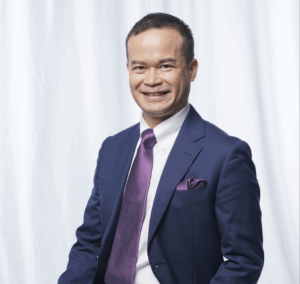
 A.J. Surin is Founder & President of Humanists Malaysia, an environmental, constitutional & human rights lawyer, and a prominent advocate for freedom of thought, conscience, and belief in Southeast Asia. His work is driven by a deeper commitment to minimizing existential risks facing humanity. Engaging both international human rights mechanisms and global policy forums, A.J. argues that safeguarding human dignity requires not only defending present freedoms, but protecting humanity’s long-term future through reason, science, and ethical responsibility. Humanists Malaysia is organizing the Asian Humanist Conference, to be held in October 2026.
In Malaysia, atheism isn’t just frowned upon; it is seen as a real threat. When a government minister in Malaysia openly called for atheists to be “hunted down vehemently,” you get a sense of how tough it is to push for secular values here. Yet, amongst all that, Humanists Malaysia stands out as a small but determined group of individuals determined to change hearts, minds and ultimately, laws. I see Humanists Malaysia’s members as “glistening specks of sand in the vast beach of Malaysians,” a poetic way to say they are few, but their presence is starting to shine. This is really a story about courage, careful strategy, and some rare, diplomatic wins in one of Southeast Asia’s most religiously restrictive countries.
Humanism in Malaysia is “an idea whose time has come.” Not because everyone’s rushing to embrace it but because the alternative is even worse. As the Malaysian Islamic Party (PAS) gains momentum and pushes for Malaysia to become a full Syariah state, secular voices feel more necessary than ever.
The barriers are massive. Islam is Malaysia’s official religion, and while the Federal Constitution protects religious freedom, that doesn’t apply if you’re Muslim and want to leave the faith. In several states, apostasy is actually a crime, with punishments ranging from fines to jail time; or even whipping. There are also administrative barriers to leaving Islam, which exist in some states where apostasy is not expressly criminalized. So, in Malaysia, Muslims who no longer believe often live in hiding, keeping their non-belief secret from friends and family for fear of rejection, legal persecution, or worse.
Back in 2017, when a photo from an atheist meetup in Kuala Lumpur (the capital city of Malaysia) went viral, the fallout was immediate. People in the photo faced death threats and government investigations. A Minister declared that anyone seen in the picture had to be “hunted down vehemently,” while authorities promised to investigate if any Muslims were present, treating the whole thing as a crisis for “the faith of Muslims in the country.” For humanists and atheists, that’s the daily reality: dodging hostility at every turn.
Despite all of this, Humanists Malaysia has pulled off something really impressive: it is getting noticed in regional diplomacy circles. Last year, Humanists Malaysia was involved in the ASEAN Peoples initiative, teaming up with civil society groups from Southeast Asia to talk directly with the Association of Southeast Asian Nations
(ASEAN), a regional intergovernmental organization of 11 member states which was established in 1967. Humanists Malaysia led the group focused on freedom of thought, conscience, and belief, with support from humanists in Myanmar, the Philippines & Singapore, and Sisters in Islam, a Malaysian group fighting for Muslim women’s rights.
Honestly, this alliance with Sisters in Islam is mind-blowing. For a Muslim women’s rights group to stand with humanists in a region where atheism is basically hated? That tells you the fight for freedom of thought goes deeper than religious boundaries; it’s about basic human dignity. In February 2025, Humanists Malaysia had its first-ever meeting with the Malaysian Ministry of Foreign Affairs alongside ASEAN Peoples. Humanists sat across the table as an official group. It was a big shift, showing that non-religious perspectives can finally get heard by the government of Malaysia.
In May 2025, Humanists Malaysia hosted the ASEAN Freedom of Thought, Conscience & Belief Forum in Kuala Lumpur. For the first time, humanist leaders, religious NGOs, interfaith activists, academics, and human rights lawyers gathered to discuss freedom of belief across Southeast Asia.
They didn’t dodge the tough topics. Forced conversion of indigenous people to Islam in Sabah, proposals to seriously expand Syariah court powers (from 3 to 30 years imprisonment), conflicts between civil and Syariah courts, and the huge question: can you separate religion from state in Malaysia?
For me, one of the best parts of the forum was introducing humanism to a group of curious minds in a place where it is still an alien concept. Humanists Malaysia made it clear; we are here for discussion, not dogma. We want to find common ground, not pick fights.
Undoubtedly, backlash followed. Two coalitions of Islamic NGOs slammed the forum’s recommendations to the government of Malaysia about separating religion and state. That said, Humanists Malaysia achieved its primary objective from the very start: humanist ideas are now part of the mainstream conversation.
Humanists Malaysia isn’t just working & advocating locally. At the 60th Session of the UN Human Rights Council in September 2025, together with Humanists International, it spoke out. The chasm between Malaysia’s constitutional protections and non-religious Malaysians was highlighted. Malaysia is one of only 14 UN countries that hasn’t signed or ratified the International Covenant on Civil and Political Rights; which guarantees freedom of belief, including for humanists.
The statement highlighted Malaysia’s strict apostasy laws, the social stigma faced by non-religious people, and recent attempts to jail Muslim men for skipping Friday prayers. They urged Malaysia to adopt international human rights standards and protect all minorities.
Even with these diplomatic wins, Humanists Malaysia isn’t free to operate openly. Officials claim atheism is unconstitutional and dangerous. If Malaysia ever openly acknowledged its non-religious population as substantial, the fear is that a riot may break out, since apostasy is seen as a huge sin in Islam. These days, pressure is rising for stricter Islamic governance, with PAS becoming more powerful. Plans to boost Syariah court powers & deconversion restrictions all point to an even smaller space for humanists.
Building a truly humanistic Malaysia will be a very long journey. The approach is slow and steady: befriend moderates, engage in interfaith dialogue, boost Humanists Malaysia’s international profile, and slowly normalize secular humanism in public conversations. Since atheism and humanism are often painted as threats to social cohesion, just being open about one’s non-belief is an act of real bravery here. But this movement has resilience. By connecting internationally, finding allies at home, and pushing for legal reforms bit by bit, it is laying the foundation for a freer, more accepting Malaysia.
Its impact goes beyond Malaysia. In a region where religious nationalism is getting stronger and secular voices are harder to find, Humanists Malaysia proves you can advocate for reason, compassion, and human rights even when things get tough. Its diplomatic work shows that humanist voices can gain legitimacy, if it has a careful strategy, coalitions and has international support.
For the thousands of Malaysians who quietly doubt, question, or look for meaning outside religion, Humanists Malaysia offers hope. It is proof that a future is possible; one where every Malaysian, whatever they believe or don’t believe, can live openly and honestly. Where freedom of thought isn’t just a slogan, but a real right. Where
humanism finally becomes part of Malaysia’s rich, diverse fabric.
The road ahead is long, and the obstacles are huge. Still, with every forum, every statement at the UN, every new alliance, Humanists Malaysia moves Malaysia a little closer to become a more tolerant, pluralistic country. In a place where simply gathering as atheists can spark government crackdowns and threats, the fact that Humanists Malaysia exists at all is remarkable; a small act of rebellion, and a big dose of hope.
In the end, it’s not about whether Malaysia is ready for humanism; it’s whether local humanists persevere until Malaysia finally catches up.
Author Disclaimer
The views and opinions expressed in this article are solely those of the author and do not necessarily reflect the official policy or position of any organization, institution, or entity with which the author may be affiliated, including Humanists International.
Together we can do even more to promote humanist values and defend human rights. Join Humanists International as a Member Organization or become an individual supporter in your own right.