 Adrián Núñez is a Peruvian humanist activist and the co-founder and Vice President of the Peruvian Association of Atheists (APERAT). He has also served as a Board Member of Humanists International since 2026. For over a decade, he has co-hosted a radio program dedicated to skepticism, while leading public campaigns to promote secularism and defend freedom of belief in Peru.
Author Disclaimer
The views and opinions expressed in this article are solely those of the author and do not necessarily reflect the official policy or position of any organization, institution, or entity with which the author may be affiliated, including Humanists International.
There is no doubt that this is good news.
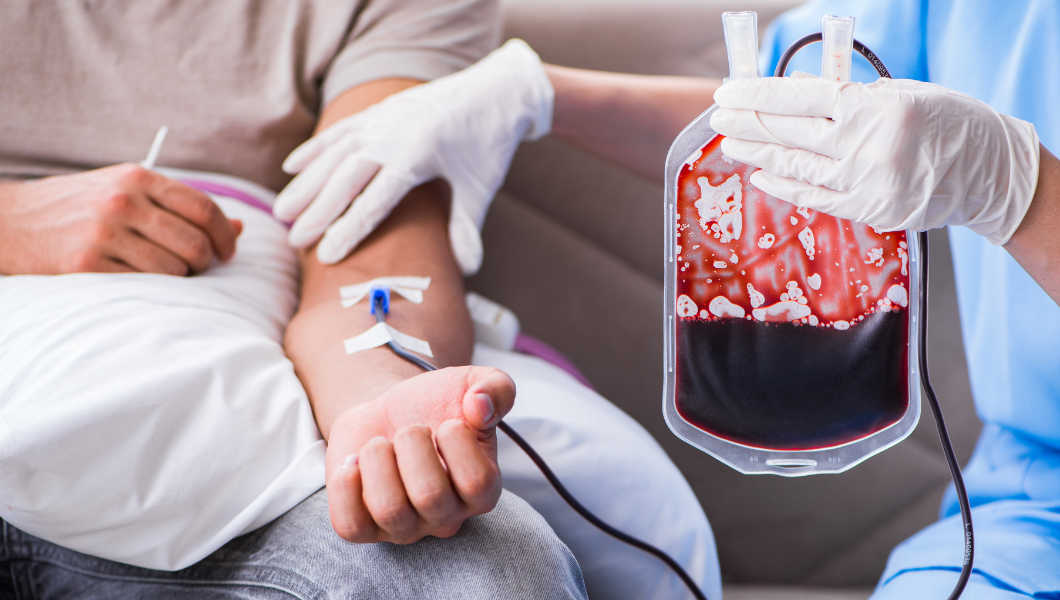
For someone who needs platelets after severe bleeding, plasma to treat a clotting disorder, red blood cells to restore the blood’s ability to carry oxygen, or white blood cells as part of cancer treatment, being able to accept these treatments can make the difference between life and death.
But this change has an important limitation. Jehovah’s Witnesses continue to reject transfusions of whole blood. The change applies to the four main blood components, leaving the decision to accept them up to each individual.
The history behind this decision is a long one. In 1945, the organisation established its prohibition on blood transfusions based on its interpretation of biblical passages that command abstinence from blood. Since then, that teaching has influenced the medical decisions of a great many people.
It is impossible to know exactly how many people have died as a result of that prohibition. There is no worldwide record of such cases. But epidemiological estimates have been made.
An analysis by the Association of Jehovah’s Witnesses for Reform on Blood (AJWRB) estimated approximately 33,000 excess deaths between 1961 and 2016, using a deliberately conservative annual mortality factor of 1%. When the 1.4% mortality rate observed in one of the medical studies analysed is used, the estimate rises to approximately 46,500 deaths. The scale of these estimates makes it necessary to take the consequences of the doctrine seriously.
Freedom of conscience means that people should be free to believe, not believe, and change their minds. But when an organization turns a particular religious interpretation into a rule that its members are expected to follow even when medical treatment is at stake, the consequences can be irreversible. There is a substantial difference between being mistaken about a theological question and stigmatising a treatment that can save a life.
In the first case, we can always reconsider our interpretation. In the second, there may no longer be an opportunity to do so.
This change means that many people will now have greater freedom to make decisions about their own bodies without having to contend with a religious prohibition that could previously weigh heavily on those decisions.
But there is another aspect of this news that deserves much more attention: not all Jehovah’s Witnesses will be able to benefit from this change in the same way.
The reason lies in something as untheological and mundane as healthcare infrastructure.
Donated blood can be separated into its different components, each of which can then be used to treat different patients. This is standard practice in modern transfusion systems. But not all countries have the same capacity to do this.
Data from the World Health Organization show a considerable disparity. In high-income countries, around 98% of collected blood is separated into components. In upper-middle-income countries, the proportion is 94%; in lower-middle-income countries, 81%; and in low-income countries, barely 52%.
For a Jehovah’s Witness living in a country with a well-developed transfusion system, accepting platelets, plasma, or red blood cells may now be a very real possibility. In many countries in the Global South, that possibility will be more limited because these components are simply not available as consistently.
And the problem is still broader. The WHO points out that blood donation rates vary widely between countries: 28.9 donations per 1,000 inhabitants in high-income countries, compared with 4.5 in low-income countries.
So this doctrinal change is good news, but it does not mean the same thing for everyone.
For decades, millions of people were taught that this was a religious obligation. Today, some of the decisions governed by that teaching have become matters of personal choice. This shows that religious doctrines are not immutable, even when they are presented for a time as though they were.
Ideas can change. Doctrines can be corrected. Institutions can acknowledge that an interpretation from the past is no longer sustainable. What we cannot recover are the lives of those who died while that doctrine was still regarded as unquestionable.
But we can welcome this change for what it is: a step towards greater individual freedom. When matters of life and health are at stake, people should be free to make their own decisions according to their conscience, their circumstances, and their understanding of what is best for themselves. That is not a small thing. It is at the heart of human dignity.
Together we can do even more to promote humanist values and defend human rights. Join Humanists International as a Member Organization or become an individual supporter in your own right.